01
Designed to cut resistance
A rounded front section, smooth roofline and carefully shaped rear end help reduce aerodynamic resistance as the vehicle moves through the air.
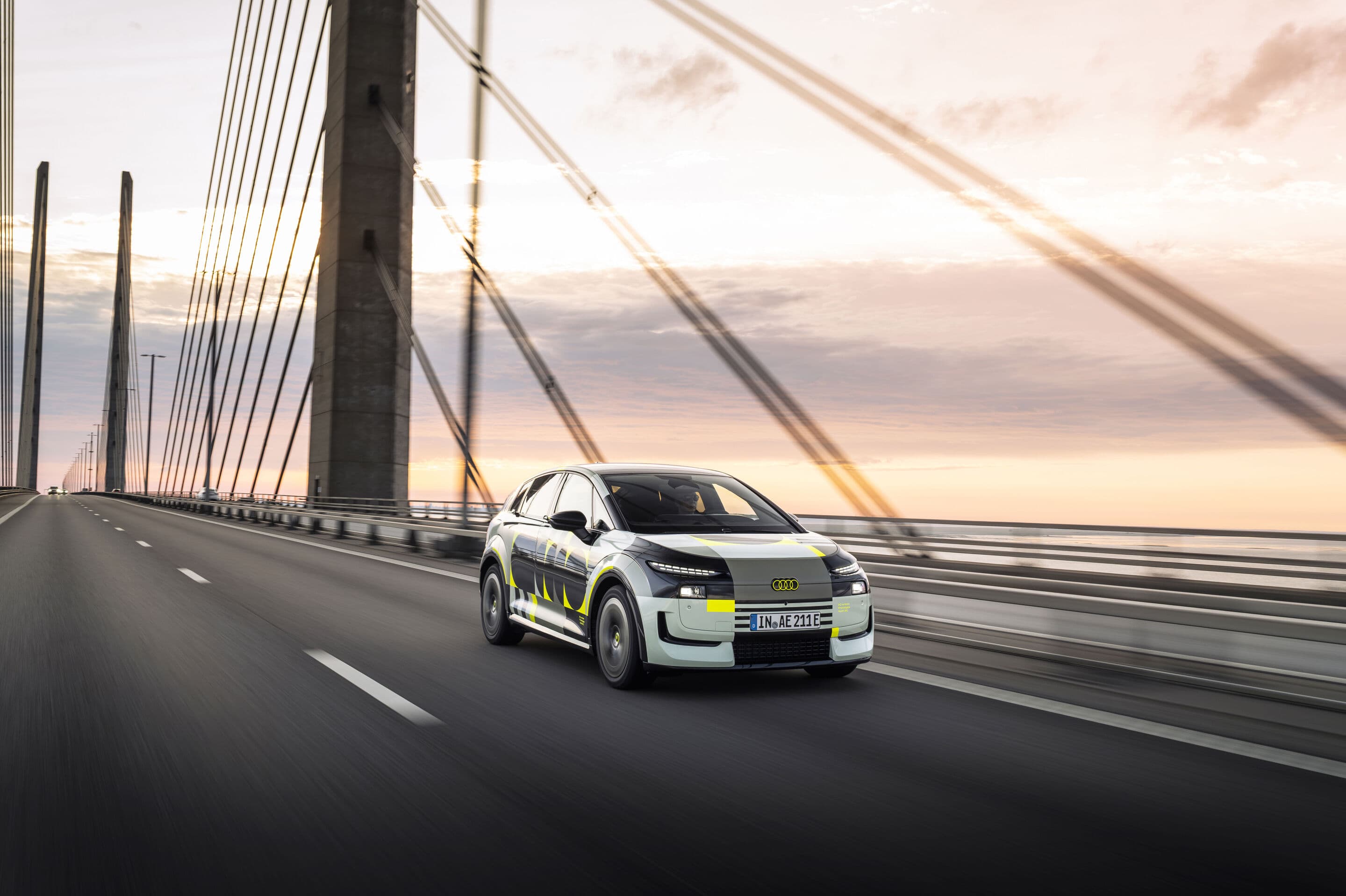
With a 0.24 drag coefficient, an advanced electric drivetrain and a 61 kWh LFP battery, the upcoming Audi A2 e-tron is setting a new efficiency benchmark ahead of its expected debut in fall 2026.
Audi has shared new details about the upcoming A2 e-tron, a compact electric car designed around energy efficiency, advanced aerodynamics and everyday usability. Preliminary WLTP figures suggest that the 140 kW version with the optional efficiency package can achieve energy consumption of just 12.8 kWh per 100 kilometres.
According to Audi, this makes the upcoming A2 e-tron the most efficient Audi announced so far. Instead of focusing purely on headline performance figures, the company is targeting a balance between low energy consumption, practical battery technology and usable everyday performance.
One of the biggest contributors to the A2 e-tron's efficiency is its aerodynamic design. The 140 kW version with the efficiency package has a drag coefficient of 0.24, making it the most aerodynamic model in Audi's compact vehicle range.
A rounded front section, smooth roofline and carefully shaped rear end help reduce aerodynamic resistance as the vehicle moves through the air.
Specially designed air channels and refined wheel-arch components guide airflow more efficiently and reduce gaps and turbulence.
Audi says the additional aerodynamic measures included with the efficiency package can reduce WLTP energy consumption by up to 0.9 kWh/100 km compared with an otherwise similar vehicle without the package.
The A2 e-tron also features an active air intake system. During normal driving, the system can remain closed to reduce drag and opens when additional cooling is required, including during charging, high-demand acceleration or hot weather.
The Audi A2 e-tron uses a permanently excited synchronous electric motor developed with efficiency and everyday driving in mind. Audi says improvements across the power electronics, motor and transmission can make the overall drive system up to 10 percent more efficient.
The power electronics use silicon carbide semiconductor technology to reduce energy losses and adapt operating behaviour according to driving conditions.
Thinner laminations and a revised winding configuration help reduce energy losses and allow the motor to operate more frequently in efficient speed ranges.
Updated transmission components use low-friction oil and a relatively tall gear ratio to help reduce motor speed and energy consumption at higher speeds.
Audi says the combined improvements across the motor, power electronics and transmission can make the overall electric drive system up to 10 percent more efficient.
The 140 kW Audi A2 e-tron will use a 61 kWh lithium iron phosphate battery. Its cell-to-pack construction integrates cells directly into the battery structure to improve packaging efficiency.
Audi claims optimised cooling and charging management can help the battery achieve wallbox charging efficiency of up to 89.6 percent.
LFP battery technology is designed for long-term durability, can generally tolerate frequent charging to full capacity and does not rely on rare earth elements in the same way as some other battery technologies.
Dedicated software algorithms also monitor and manage the battery's state of charge and long-term condition, helping improve overall efficiency and battery management.
The upcoming A2 e-tron will also support bidirectional charging technology, allowing the vehicle's battery to serve purposes beyond driving.
Vehicle-to-Load functionality will allow the A2 e-tron's battery to power compatible external electrical devices.
Vehicle-to-Home technology could allow the vehicle to operate as an energy storage source for a home when used with compatible charging infrastructure.
Audi has stated that Vehicle-to-Home functionality will initially be available in selected European markets, including Germany, Austria and Switzerland.
Audi is expected to officially unveil the new A2 e-tron in fall 2026. The model will expand the brand's electric vehicle portfolio and is positioned as a new entry-level offering in Audi's compact segment.
The A2 e-tron will arrive with a clear focus on making electric mobility more efficient without compromising everyday practicality. Its combination of low energy consumption, aerodynamic engineering, an LFP battery and updated electric drive technology could make it one of the most important upcoming EVs in Audi's lineup.
The Audi A2 e-tron is shaping up to be an important new direction for Audi's electric vehicle strategy. With preliminary consumption of just 12.8 kWh/100 km, a 0.24 drag coefficient and a 61 kWh LFP battery, the compact EV is being engineered around efficiency rather than simply maximum power.
More details, including final range figures, performance specifications, pricing and market availability, are expected closer to the vehicle's official debut. If Audi's preliminary figures translate into production reality, the A2 e-tron could set a new efficiency benchmark within the company's electric vehicle portfolio.